Know-how
A unique know-how serving soil fertility and crop performance.
A unique expertise in solid biofermentation
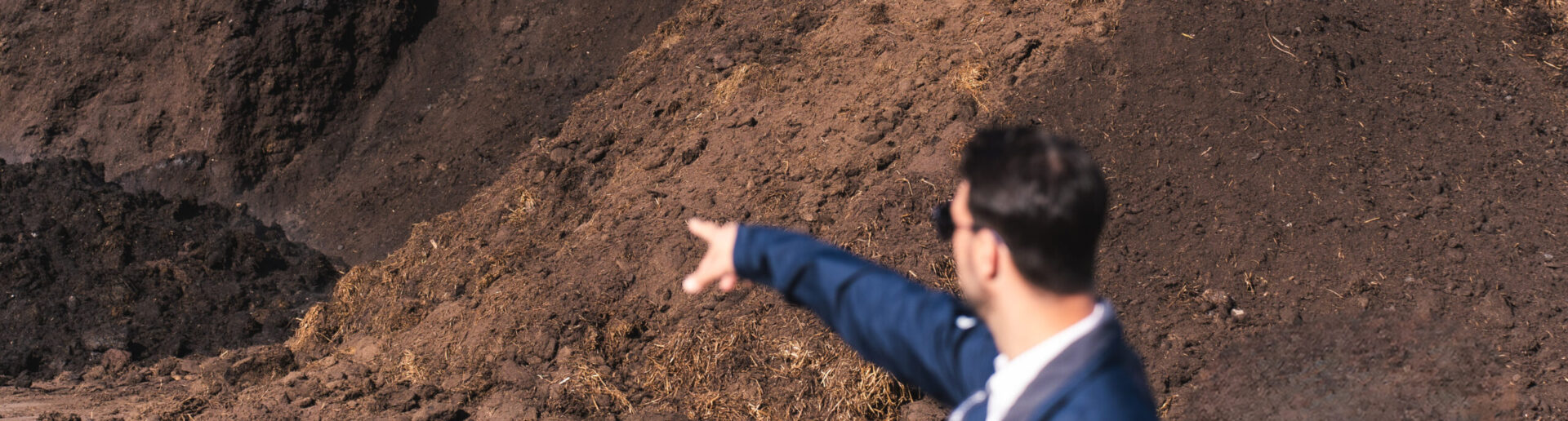
At OvinAlp Haute Fertilisation, our core business is solid biofermentation. This know-how enhances exceptional raw materials into a concentrate of biodiversity and soil fertility. Above all, we do not merely transform organic matter.
We cultivate naturally present microorganisms to reveal their full agronomic potential.
Cultivating soil life: over 600 microorganisms
Our exclusive process guides the material under strictly controlled conditions. We precisely manage time, temperature, humidity and oxygen. These parameters promote the development and structuring of microbial life.
At the end of the process, we obtain our active principle Ov, which includes more than 600 species of bacteria and fungi.
This active microbial biodiversity stimulates soil biological processes, improves nutrient availability and sustainably supports crops.
12 months to reach peak humic restitution
We apply a 12-month long biofermentation cycle to the OV active principle. Each stage is calibrated with rigorous precision, essential to reach the peak of carbon stabilization.
This stabilization maximizes humic restitution, resulting in a deeply transformed material that is stable, biologically active and highly assimilable by soils.
Complete control of biofermentation
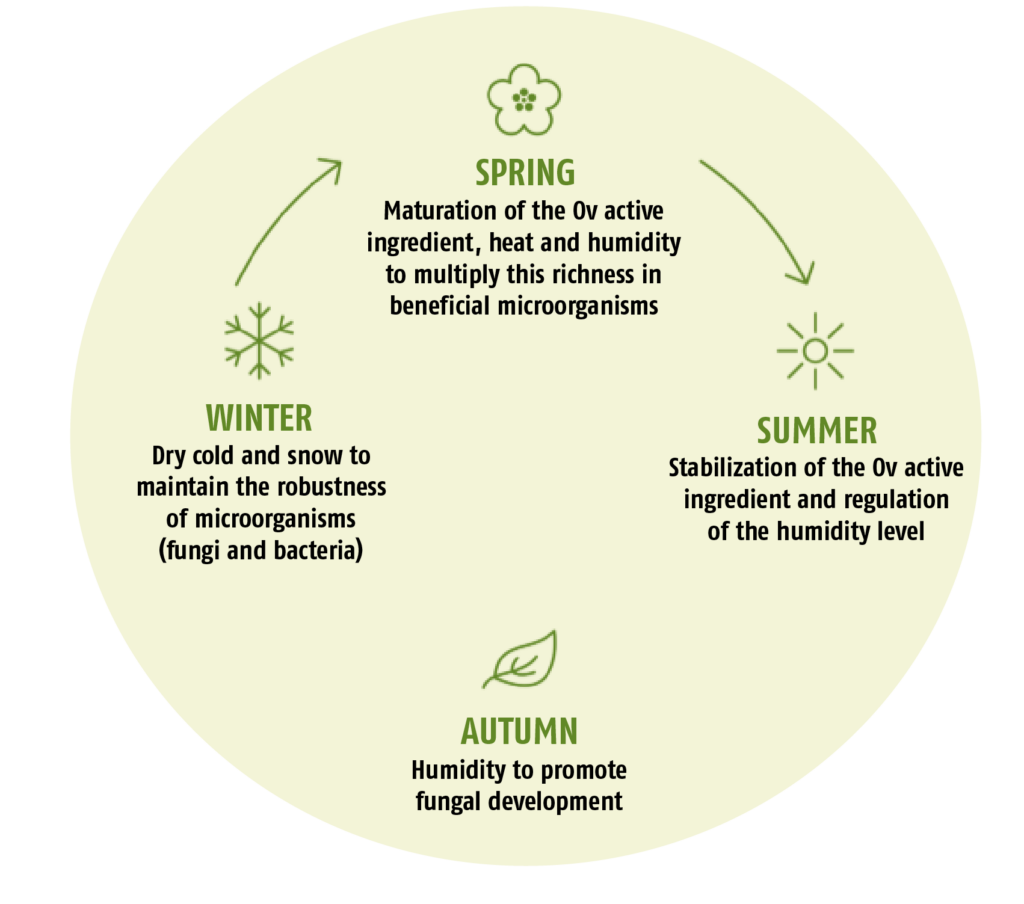
In 2005, OvinAlp implemented a solid biofermentation platform with an ISO 14001 certified hygienization protocol. This 12-month open-air process transforms manure and local fruit pulp into stable humus precursors while cultivating agronomically valuable microorganisms.
Solid biofermentation is a key specificity of OvinAlp: temperature, humidity, oxygenation and duration are meticulously controlled. This natural process eliminates pathogens and weed seeds while preserving the functional richness of the final product.
Cultivating a living active principle
Après la collecte, nous hygiénisons les fumiers de mouton (Agrément sanitaire FR 05 118 106). Nous les assemblons ensuite avec des matières végétales comme les pulpes de fruits, les drèches et les tourteaux végétaux. Puis, nous élevons ces matières pendant 12 mois sur notre plateforme de biofermentation. Cette plateforme respecte la réglementation de protection de l’Environnement ISO 14001. Ce processus donne naissance à notre principe actif Ov.
2 biofermentation phases
Aerobic phase
Aerobic microorganisms develop through oxygen, generating temperatures above 70°C, destroying pathogens and weed seeds. Materials are regularly turned, ensuring safety and consistency. Oxygenation, humidity and temperature are carefully controlled.
Anaerobic phase
This phase recreates underground life conditions. Anaerobic microorganisms degrade carbon fibers, releasing nutrients as humic and fulvic acids, essential components of stable humus.
The final phase consists of adding plant oilcakes and dried fruit pulp rich in sugars to :
- feed microorganisms
- maintain balance and stability
- stabilize moisture until field application
A living active principle, source of agronomic growth
This know-how gives rise to the Ov Active Principle, OvinAlp’s agronomic signature. Rich in beneficial microorganisms, it revitalizes soils, improves structure, increases water retention and strengthens crop resilience.
Each year, nearly 55,000 tonnes of solid fertilizers and 300,000 liters of foliar and root solutions are produced at the Ribiers site.
Composting or biofermentation?
Composting is a fermentation process relying on oxygen. Biofermentation refers to a process where all parameters are scientifically and precisely controlled (time, temperature, humidity, oxygen).